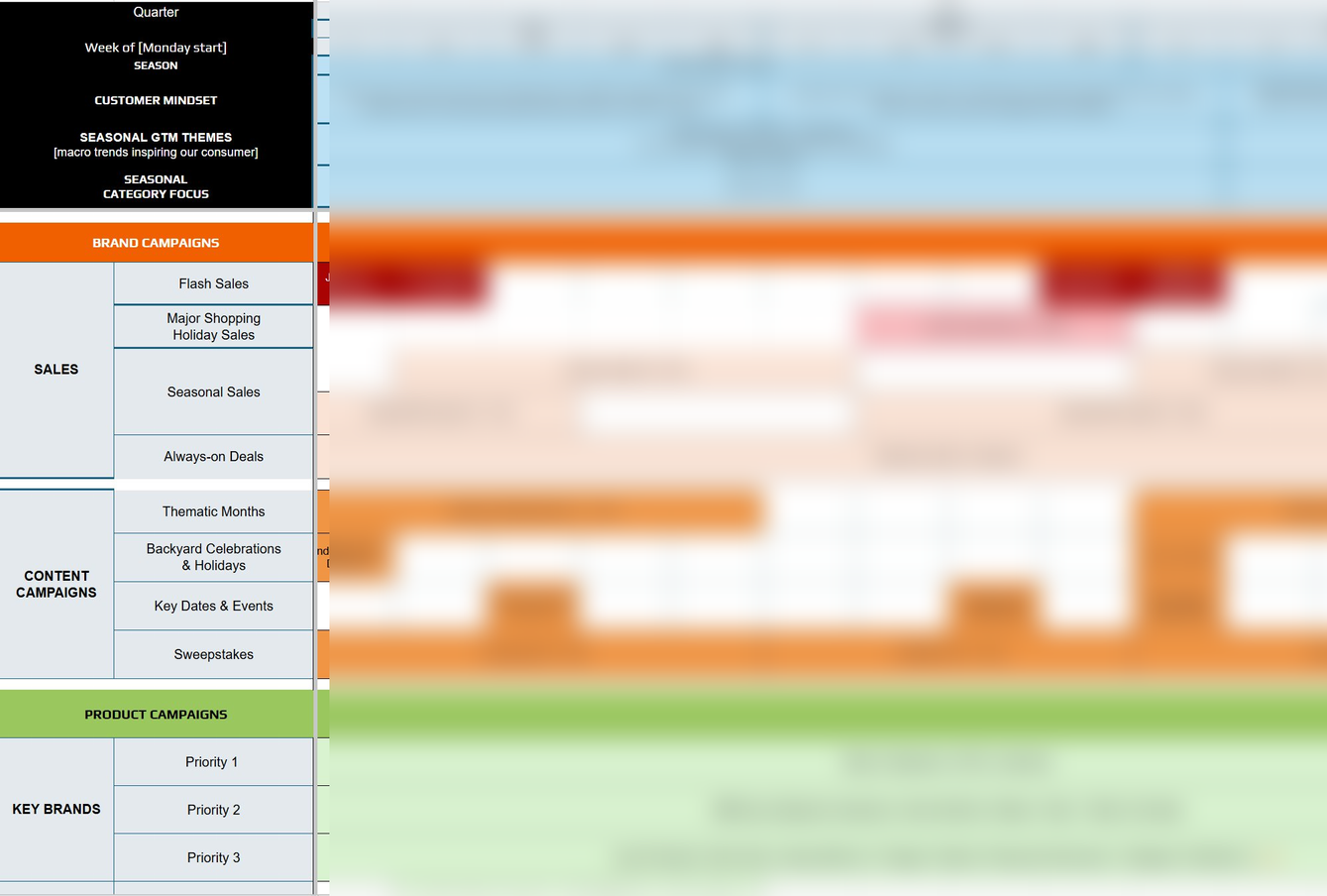
Cross-Functional Brand Marketing Calendars
Both BBQGuys and Blaze had the same problem: teams were working from different versions of the roadmap with no shared source of truth. At BBQGuys I rebuilt an existing promotional calendar into a full brand planning system; at Blaze I built one from scratch. In both cases I owned the design, implementation, and ongoing management, gathering structured input from channel owners, category managers, and sales teams to make it stick.
-
Designed the full calendar framework from scratch for BBQGuys first, then adapted and built a version for Blaze. The format was built to track seasonal themes, brand focus areas, sales events, content campaigns, key brand partner priorities, and new arrivals in a single integrated view, giving every team visibility into everything impacting the brand at any given time.
Defined the input process and update cadence, managing contributions from channel owners, category managers, and sales teams to keep the calendar accurate and forward-looking rather than reactive.
Embedded the calendar into regular cross-functional meetings so it became a living resource referenced in planning decisions rather than a document that sat unused between quarterly reviews.
Collaborated with leadership to ensure the calendar was adopted as the basis for budget planning and campaign prioritization, elevating it from a marketing operations tool to a business planning asset.
-
The calendars became essential operational infrastructure for both brands, used daily by 10 to 20 people across marketing, sales, creative, and channel teams. Adoption by leadership and integration into budget planning processes meant the calendar shaped how both organizations allocated resources and set priorities. Teams reported fewer last-minute requests and fire drills, faster campaign launches, and meaningfully improved cross-functional communication. What started as a planning tool became the connective tissue between brand strategy and day-to-day execution.