Evolution of Brand Strategy | Blaze
Blaze had strong product equity and a recognizable identity but no centralized brand strategy guiding decision-making across marketing, sales, creative, and channel teams. As the sole author and owner, I built the framework independently from discovery through presentation, covering stakeholder alignment, cross-functional process design, and deliverable scoping, and presented it formally to leadership.
-
Conducted a thorough discovery and assessment phase beginning in March 2025, auditing existing brand materials, evaluating market position and competitive landscape, gathering insights from internal teams, and mapping existing workflows and processes to identify gaps and inefficiencies.
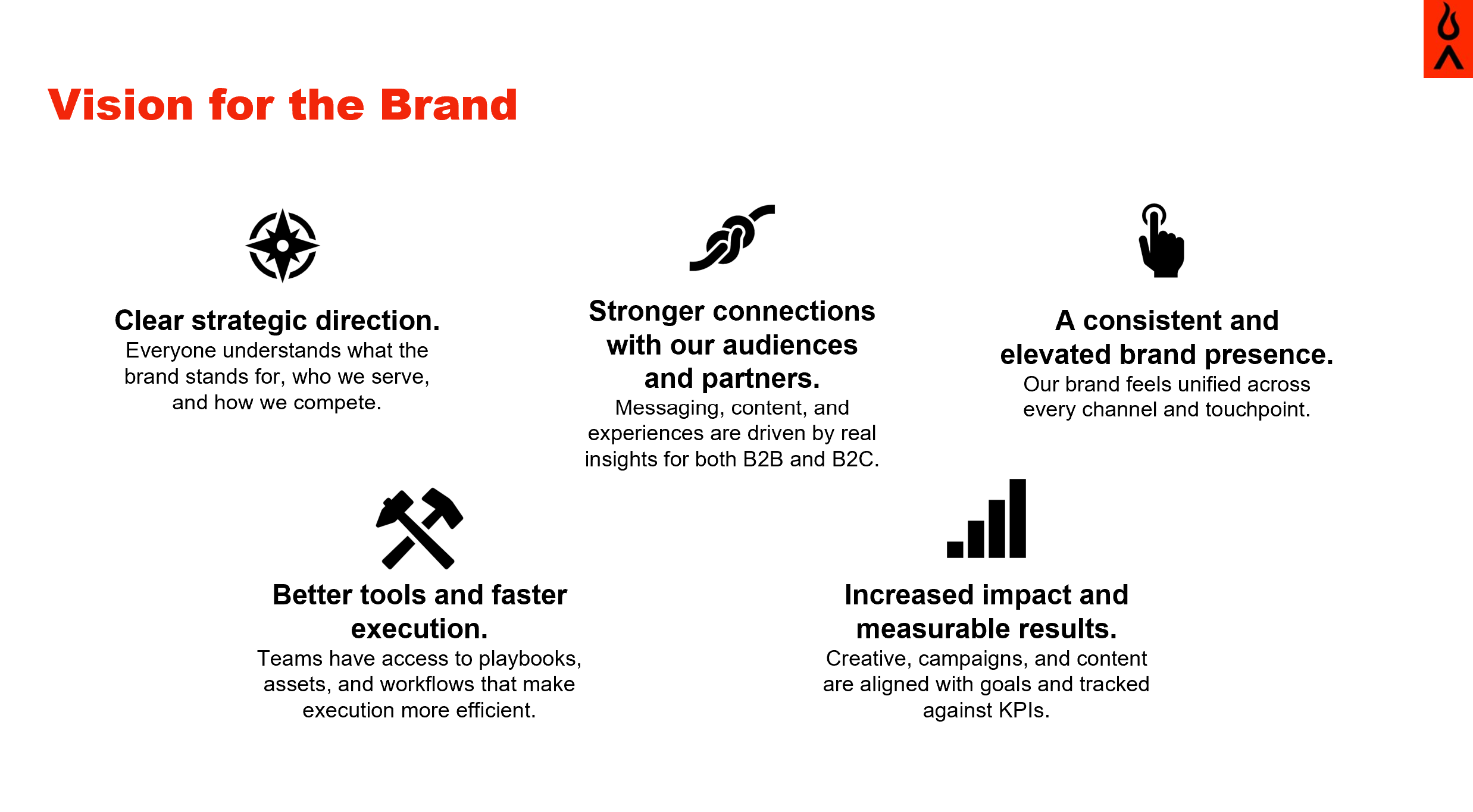
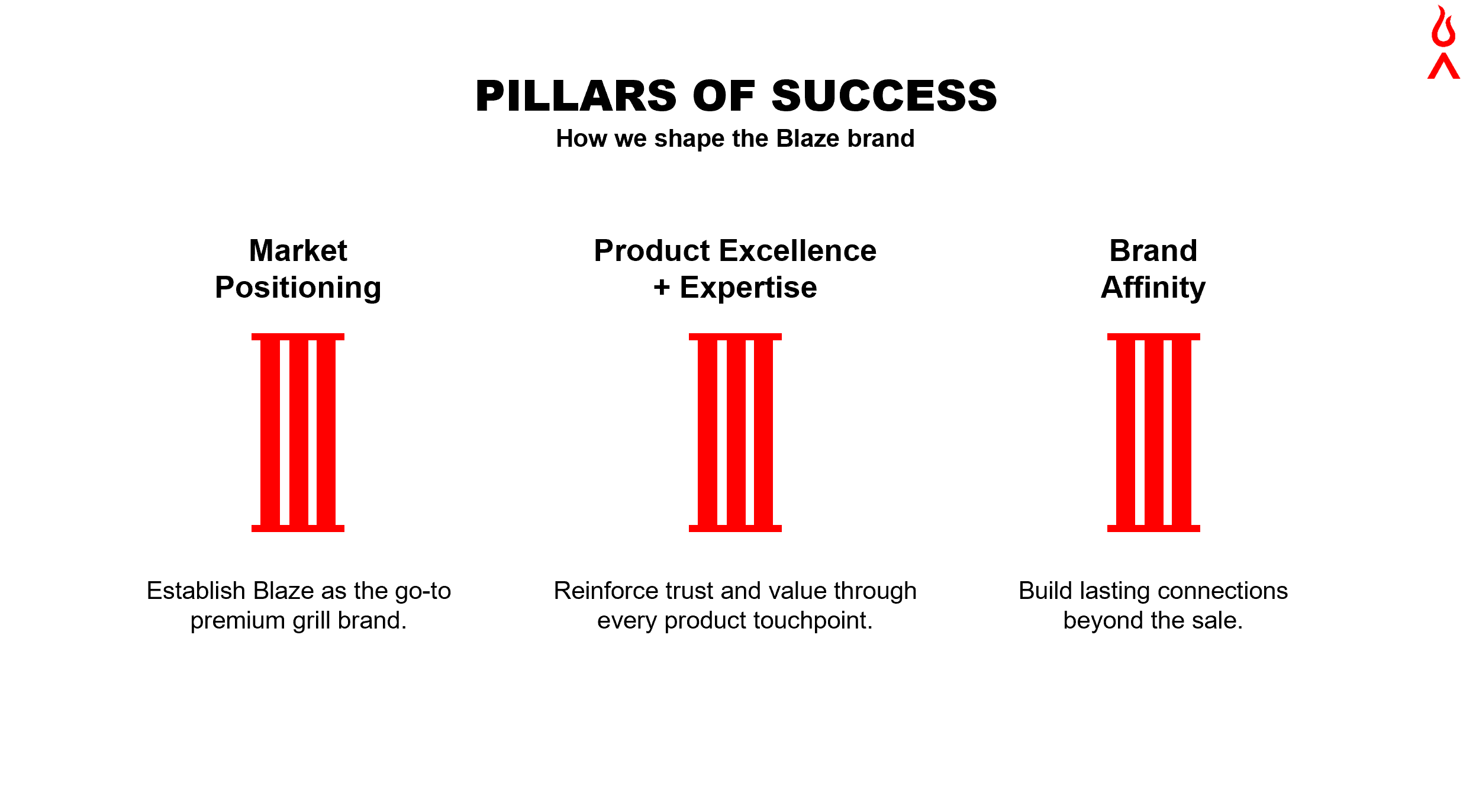
Developed a brand strategy framework built around three pillars: Market Positioning, Product Excellence and Expertise, and Brand Affinity, grounded in Blaze's existing equity of being engineered to last a lifetime and its brand character of understated confidence paired with approachability.
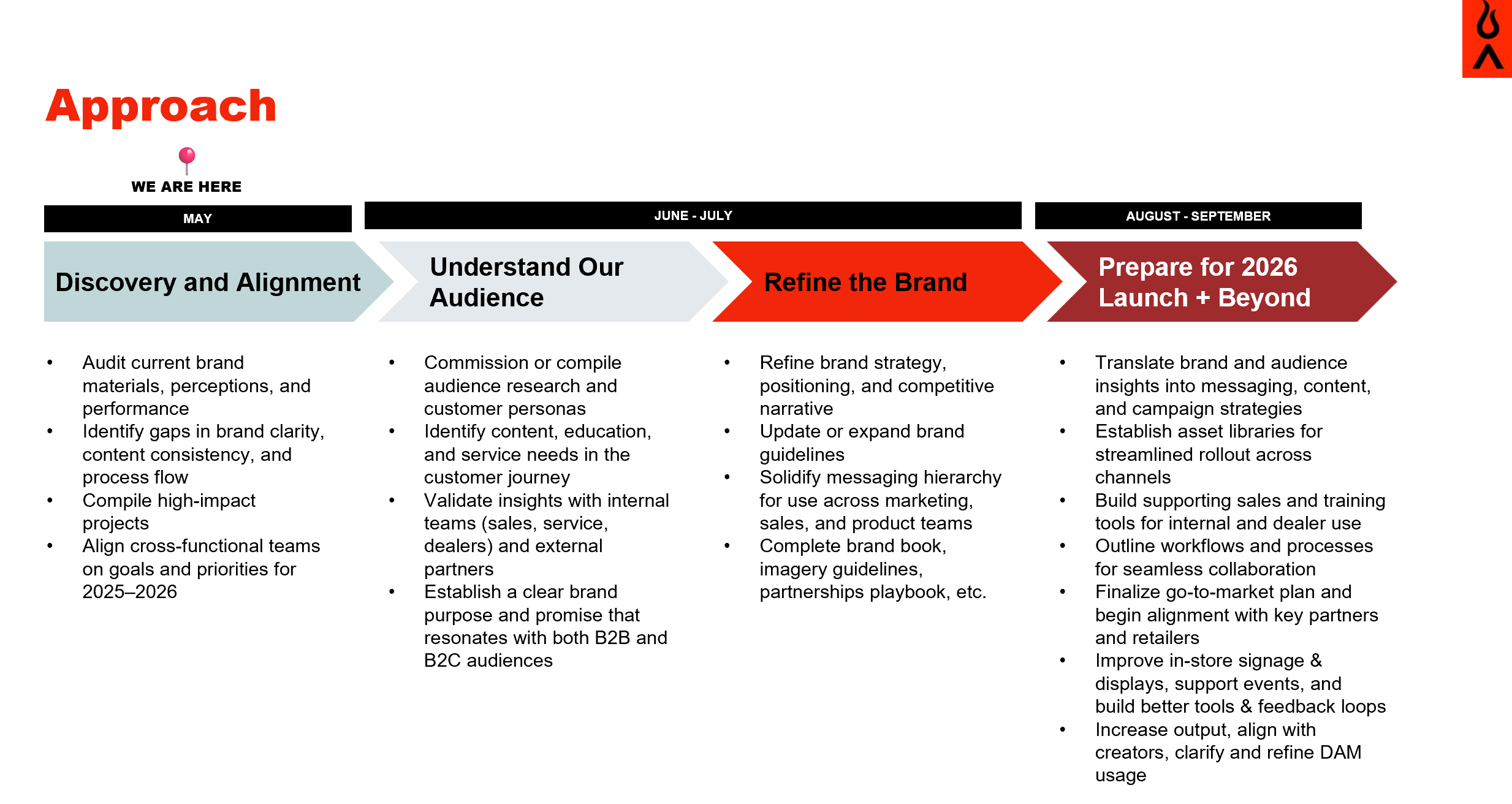
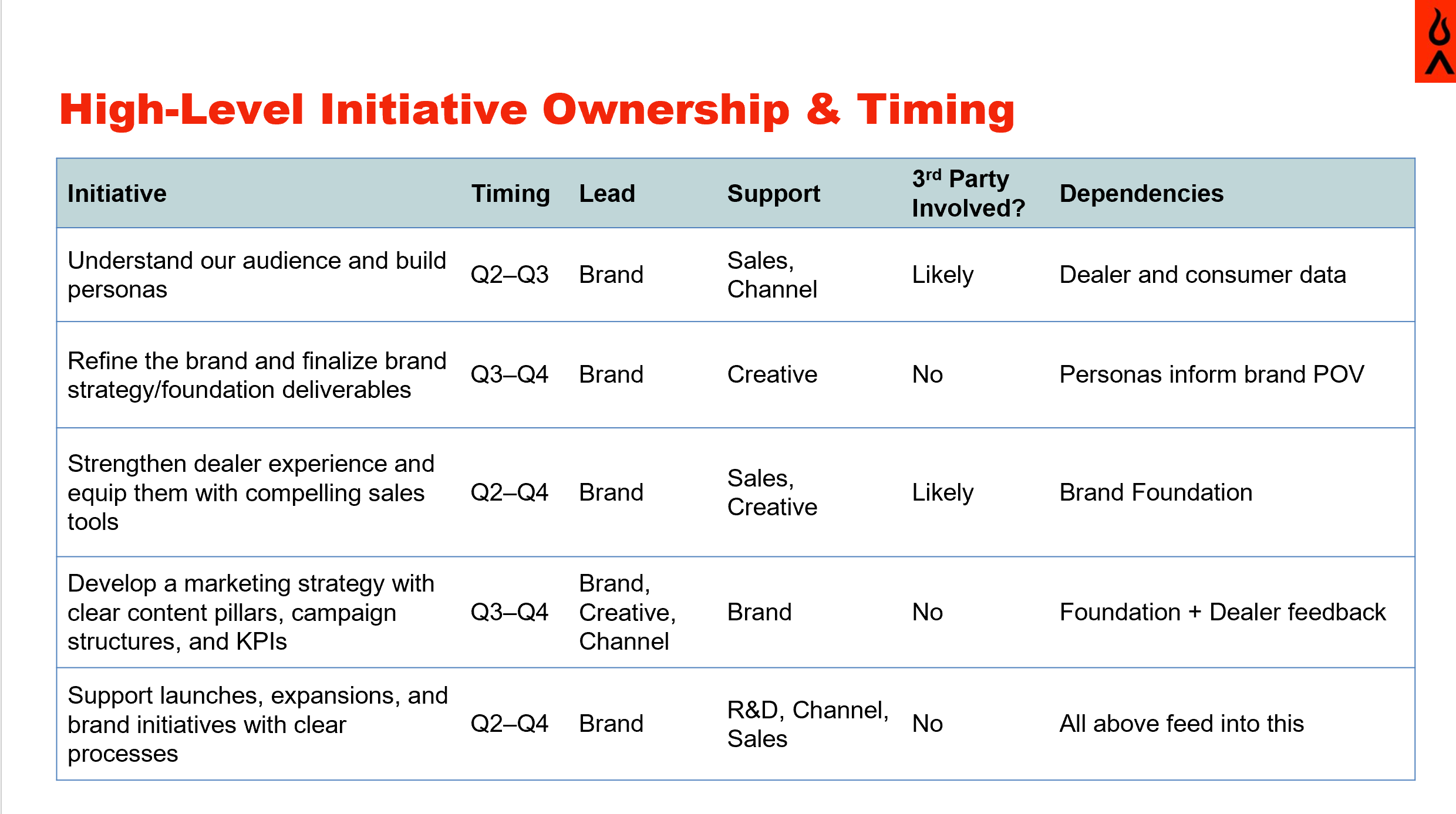
Defined a phased roadmap spanning May through September 2025 covering four stages: Discovery and Alignment, Understand Our Audience, Refine the Brand, and Prepare for 2026 Launch and Beyond, with specific deliverables, owners, and timing assigned to each phase.
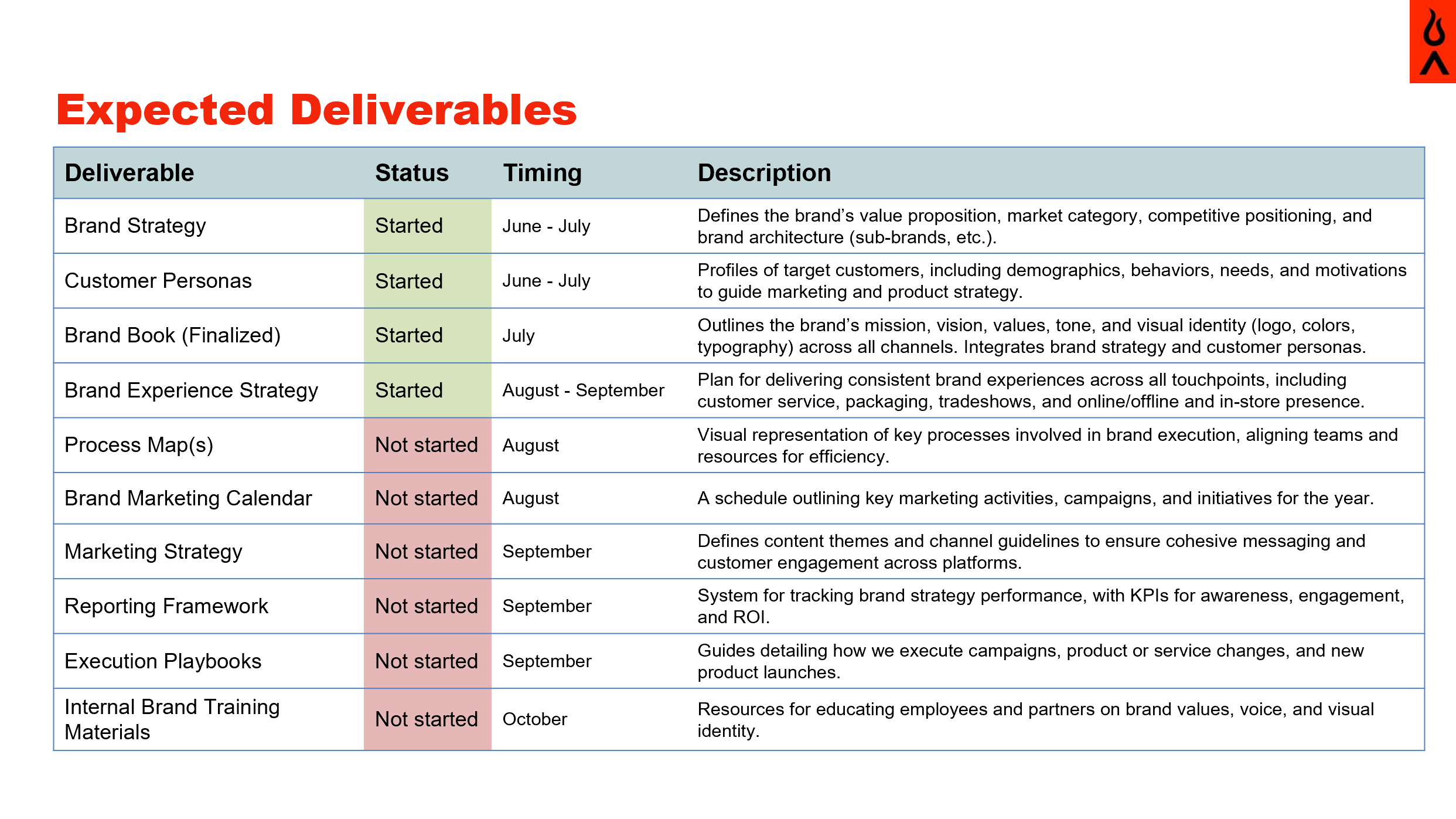
Scoped ten strategic deliverables including a brand strategy, customer personas, brand book, brand experience strategy, marketing strategy, reporting framework, and execution playbooks, each with defined outputs, ownership, and cross-functional dependencies.
Built a RACI framework mapping accountability across brand, creative, sales, channel, agency, and leadership for every deliverable, establishing clear ownership and reducing the ambiguity that had been slowing execution.
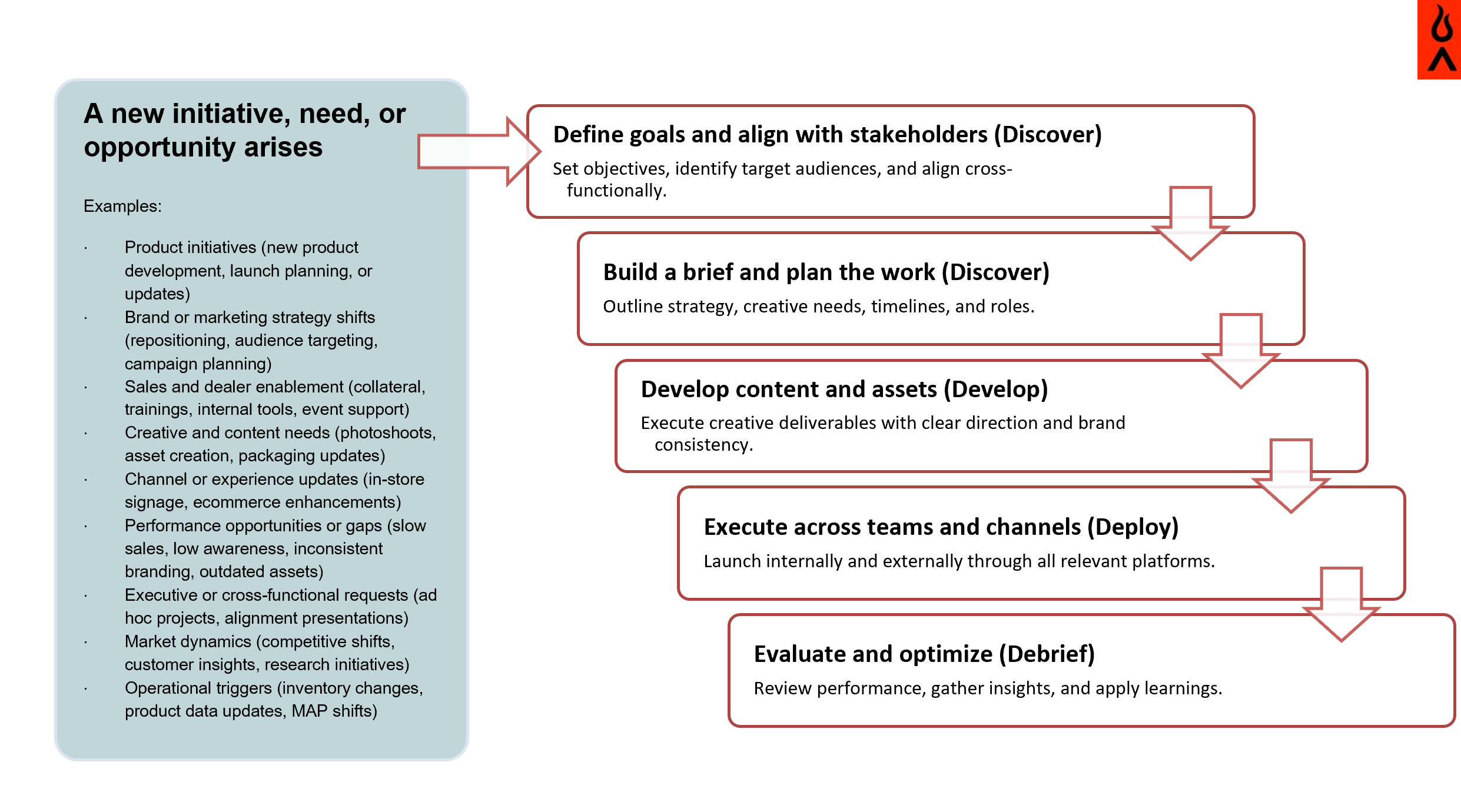
Outlined a project lifecycle model (Discover, Develop, Deploy, Debrief) and a cross-functional process map to give teams a repeatable framework for executing any future initiative, from product launches to campaign planning to dealer enablement.
Identified key opportunities across four areas: building a stronger insights foundation, developing customer personas and feedback loops, creating dealer enablement tools and training, and establishing repeatable processes with clear team roles.
Presented the full framework to leadership and planned to present to the broader marketing organization, facilitating working exercises to align teams around brand perception and positioning before rolling into execution planning.
-
The framework was presented successfully to leadership, creating alignment around the brand's strategic direction, pillars, and priorities for the first time. Following the presentation, leadership made the decision not to invest in the full scope of brand work outlined in the roadmap, shifting priorities toward other areas of the business. As a result, the broader execution plan did not move forward. The framework, roadmap, deliverable structure, and cross-functional processes remain a complete strategic foundation that accurately diagnosed where the brand stood and what it needed to grow.